
Aircraft Consumables Supplier for Airlines and MRO
Shelf life, pack sizes and replenishment: how to keep a hangar stocked with consumables without filling the store with expired material.
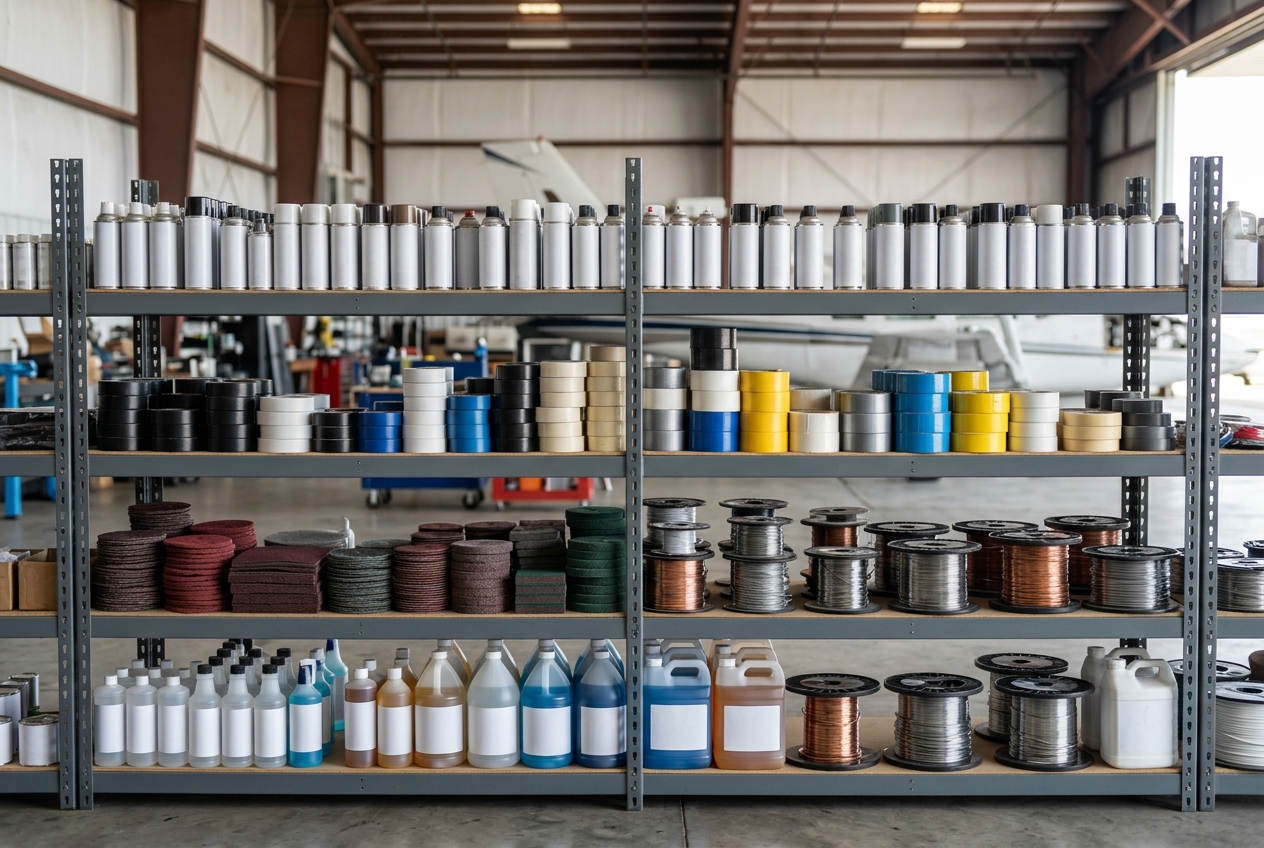
Consumables are low value per line and high impact on the floor. An aircraft does not stop for a missing sealant cartridge — until it does. The trick is buying them in a way that keeps the shop supplied without filling the store with expired material.
What counts as a consumable
Adhesives, sealants and silicones; tapes and masking; cleaning and degreasing chemicals; surface treatments and primers; paints, coatings and thinners; abrasives and polishing materials; corrosion inhibitors; maintenance and shop chemicals; and general workshop hardware.
Shelf life is the whole problem
Most consumables are shelf-life controlled, and most goods-receipt rejections come from shelf life rather than quality. Three habits solve it:
- Ask for the remaining shelf life before despatch, not after
- Set a minimum acceptable remaining life in your purchase order text
- Split large orders into staged deliveries so material arrives when it will be used
Choose the pack size deliberately
The cheapest unit price is usually the largest pack, which is also the pack most likely to expire half-used. Buy the pack size that matches consumption between deliveries. For seldom-used products, the small pack at a higher unit price is nearly always cheaper in the end.
Replenishment instead of reordering
Consumables consumption is predictable enough to plan. Give your supplier a list of your regular lines with typical monthly usage and let them quote a standing arrangement with agreed lead times. That turns a stream of urgent single-line orders into a scheduled delivery, and it usually lowers freight cost as well.
Documentation and compliance
Depending on product and source, consumables can be supplied with a Certificate of Conformity, Certificate of Analysis, MSDS/SDS and Technical Data Sheet. Batch numbers should be recorded on receipt so a product can be traced later. Many chemicals are dangerous goods; classification, packing and declarations are agreed before transport is booked, and some products must move by sea or road.
Storage on your side
Keep chemicals in their original labelled packaging, within the temperature range on the label, and segregate incompatible products. Rotate stock so oldest usable material is issued first. None of this is glamorous, and all of it saves money.
Working with us
Send your consumables list with pack sizes and typical quantities. We will quote price, availability and remaining shelf life per line, flag the dangerous goods items, and propose a delivery pattern that fits how quickly you actually use the material.
Frequently asked questions
- Can you set a minimum remaining shelf life on delivery?
- Yes. State the minimum remaining life in your purchase order and we will supply against it or tell you before despatch that we cannot.
- Can consumables be delivered on a schedule?
- Yes. Send your regular lines and typical monthly usage and we will quote a standing replenishment arrangement with agreed lead times.
Need a price for a part number?
Send the part number, quantity and required condition — routine enquiries are answered within one business day, AOG immediately.
Request a quotation